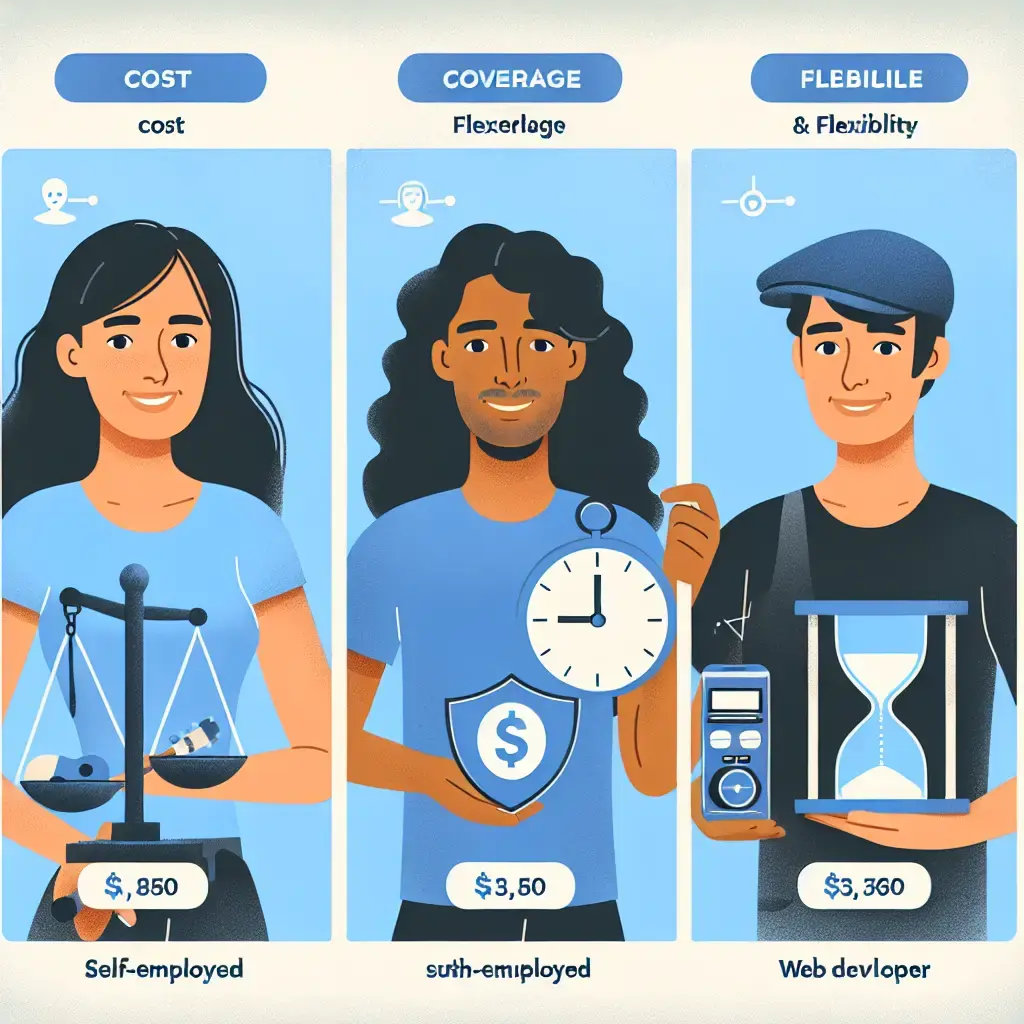
Navigating the World of Self-Employed Health Insurance
Navigating the world of self-employed health insurance can feel overwhelming. Understanding your options is crucial for maintaining both your health and financial well-being. As a self-employed individual, freelancer, or entrepreneur, you don't have the luxury of employer-provided health coverage. This makes it essential to explore the best health insurance plans tailored to your unique needs. With a plethora of self-employed health coverage options available, finding the right plan that offers comprehensive coverage without breaking the bank is paramount.
Comparing health insurance plans is a critical step in this process, as it allows you to weigh different aspects such as premiums, coverage limits, and network providers. Affordable health insurance for self-employed individuals is not only possible but necessary for safeguarding your business and personal finances against unexpected medical expenses. The self-employed health insurance marketplace offers a variety of individual health insurance plans, including private health insurance for self-employed professionals, ensuring you have access to quality care.
Understanding the Importance of Health Insurance Comparison
For the self-employed, health insurance isn't just a necessity—it's a vital component of financial stability. When you compare health insurance plans, you're not just looking at cost; you're evaluating coverage limits, network providers, premiums, and more. According to recent studies, affordable health insurance for self-employed individuals is attainable with thorough research and comparison (Kaiser Family Foundation).
Consider using self-employed health benefits comparison tools. These tools can reveal differences between individual health insurance plans, helping you choose the best health insurance for self-employed needs without overspending.
Recent Trends in Self-Employed Health Insurance
Recent developments in healthcare and financial markets have a direct impact on available self-employed health coverage options. A study on the safety of chiropractic and physiotherapy care underscores the importance of understanding potential risks associated with different healthcare services (Journal of Chiropractic Medicine). This highlights the need to assess not just cost but also the quality of care within your plan's network.
Notably, changes to Medicare drug pricing announced by President Joe Biden and Vice President Kamala Harris promise significant cost savings for medications. These changes may influence private health insurance for self-employed individuals by potentially lowering overall healthcare costs (Centers for Medicare & Medicaid Services).
Key Factors in Choosing Health Insurance for Freelancers
When choosing health insurance for freelancers, several factors should guide your decision:
- Premiums: Assess monthly premiums against your budget. Opt for a plan that balances affordability with coverage needs.
- Deductibles: Higher deductibles often mean lower premiums but ensure you can cover the deductible in case of medical emergencies.
- Network Providers: Check if your preferred doctors and hospitals are within the plan's network.
- Coverage Limits: Evaluate annual and lifetime coverage limits to prevent unexpected costs.
Additionally, understanding health insurance tax deductions for self-employed individuals can lead to significant savings. These deductions allow you to subtract premium payments from your taxable income, making health insurance more affordable (IRS).
Case Study: The Impact of Online Consultations
A recent study explored the effectiveness of online doctor consultations compared to traditional in-person visits. For the self-employed, who may value flexibility and time efficiency, online consultations can be a beneficial addition to their health coverage options. This shift could also reduce costs, further emphasizing the need to compare health insurance plans that offer telehealth services (National Bureau of Economic Research).
Practical Tips for Securing the Best Health Coverage
Here are some self-employed health insurance tips to help you secure the best coverage:
- Utilize Health Insurance Marketplaces: Explore the self-employed health insurance marketplace for diverse options tailored to individual needs.
- Consider Private Health Insurance: For more personalized care, private health insurance for self-employed individuals might be a preferable option.
- Stay Informed on Legislative Changes: Legislative changes, such as those affecting drug prices or healthcare accessibility, can impact your choice of plan. Stay informed through reliable sources like Healthcare.gov.
- Consult with a Financial Advisor: Understanding complex terms and conditions can be challenging. A financial advisor specializing in healthcare can provide valuable insights.
Looking Ahead: The Future of Self-Employed Health Coverage
The future of self-employed medical insurance options looks promising as technology and policy changes continue to evolve. With ongoing advancements such as enhanced CT imaging techniques in healthcare (Radiology Today), insurance providers are likely to expand their coverage offerings.
Ultimately, comparing health insurance plans is not just about finding the cheapest option but about securing comprehensive coverage that aligns with your personal and business goals. By staying informed and proactive, you can ensure that your health and financial well-being are protected as you navigate the dynamic landscape of self-employment. Are you ready to explore your options and find the best plan that suits your unique needs? Dive into resources like eHealthInsurance to start your journey today.
Conclusion: Navigating the Self-Employed Health Insurance Landscape
Securing the right health insurance as a self-employed individual is essential for both your financial stability and overall well-being. By understanding and comparing available plans, you can make informed choices that align with your unique needs. Here’s a recap of key considerations:
- Comprehensive Comparison: Evaluate not only costs but also coverage limits, network providers, premiums, and deductibles.
- Recent Trends: Stay updated with healthcare developments and legislative changes, such as Medicare drug pricing adjustments, which may affect private health insurance options.
- Telehealth Opportunities: Embrace online consultations as a flexible and cost-effective component of your healthcare plan.
- Financial Strategies: Leverage tax deductions for premium payments to reduce expenses and consider consulting a financial advisor for personalized advice.
By keeping these factors in mind, you can navigate the complex landscape of self-employed health insurance more confidently. Remember, it's not just about finding the cheapest option—it's about ensuring comprehensive coverage that supports your personal and professional goals.
As you explore your health insurance options, we encourage you to engage with the community by sharing your experiences and insights. How have recent healthcare changes impacted your choices? What tools or resources have you found most helpful in making your decision? Your feedback can be invaluable to fellow entrepreneurs on similar journeys.
Stay proactive, stay informed, and continue to prioritize both your health and financial well-being. For further exploration, visit reputable resources like eHealthInsurance to begin comparing plans today.
Warm regards,
Benjamin Carter